

How to remove a wine stain from upholstery?
Krok po kroku pokażemy Ci, jak skutecznie usunąć plamy z wina z kanapy, fotela lub krzesła.
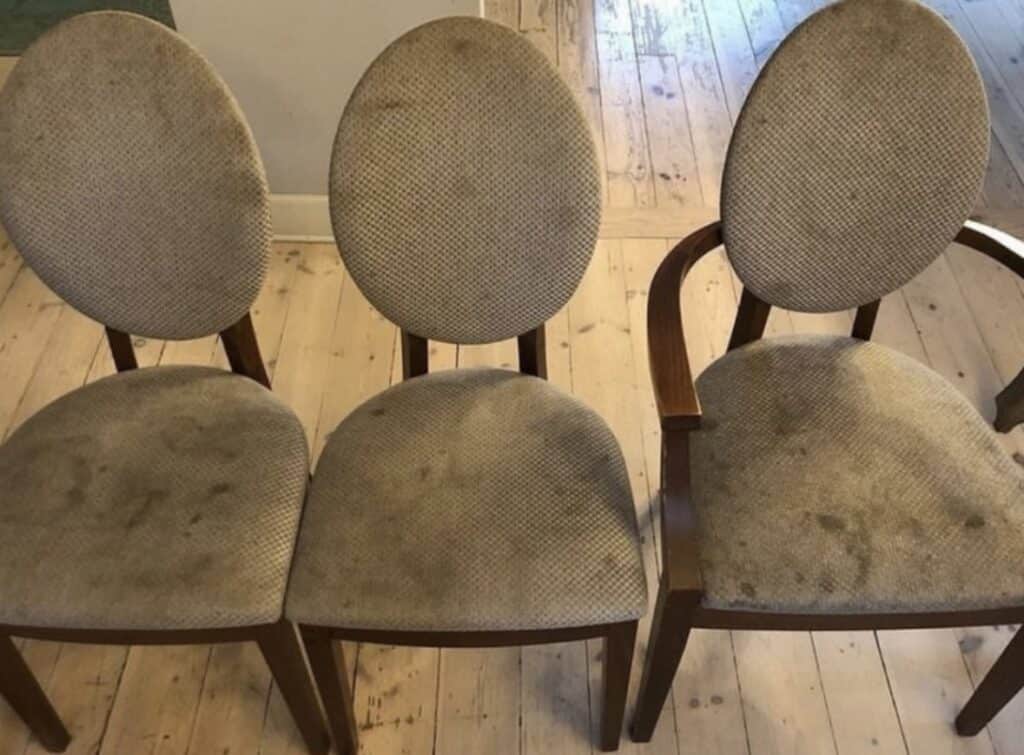
A wine stain is the most colourful mark that can land on a sofa - and also one you can remove, provided you act at once and in the right order. Below you will find a proven routine for a fresh stain, a method for a dried one, the truth about salt and white wine, and a list of approaches that only make things worse.
Why wine stains more heavily than other drinks
The colour of red wine comes from anthocyanins, the natural pigments in grape skins. They have two properties that make them a difficult opponent: they bind strongly to fibre, and they change colour depending on pH. The same stain is red in acidic conditions and can turn a greyish blue in alkaline ones.
Alongside the anthocyanins come tannins and sugar. The tannins are responsible for how stubborn the stain is; the sugar is why, weeks later, a sticky dust-attracting patch appears where the stain was. With wine, then, it is not only about removing the colour but about rinsing the fabric thoroughly.
A fresh wine stain - the routine
With a white paper towel, pressing down. Work from the outside inwards so you do not enlarge the stain. Change towels - the more wine you take up at this stage, the less work later.
Dampen a cloth with cold water, lay it on, press, lift. Repeat several times. Cold water thins the pigment and does not set it.
Washing-up liquid plus 3% hydrogen peroxide in a 1:2 ratio is the most effective home mixture against anthocyanins. On dark fabrics, test in a hidden spot first.
Leave the solution for five minutes, then lift it with a clean, damp cloth. Repeat the cycle rather than rubbing harder.
Clean water, thorough moisture removal and moving air. Do not leave detergent in the fabric - that is what causes the grey ring weeks later.
Hydrogen peroxide - when yes, when no
3% hydrogen peroxide breaks the pigment down and is the most effective home remedy for wine. It does, however, have a bleaching action, so on dark and intensely dyed fabrics it can leave a lighter patch. The rule: light synthetic fabrics, yes; dark natural fabrics, only after a test; wool and silk, no.
Salt, white wine, milk - which of these tips work
Plenty of household myths have grown up around wine stains. Some make sense, others do harm.
| Method | Does it work | Notes |
|---|---|---|
| Salt | Partly | It draws liquid from the surface but does not remove pigment. On upholstery the crystals grind into the weave - a towel is better |
| White wine | No | It dilutes the red but adds its own sugar and acids. Plain cold water does the same thing |
| Milk | No | It adds fat and protein, in other words a second stain to remove |
| Sparkling water | Yes, on a fresh stain | The bubbles push pigment upwards; it only works in the first few minutes |
| Hydrogen peroxide plus washing-up liquid | Yes | The most effective home mixture; needs a colour test |
| Bicarbonate of soda with water | Partly | Helps with residual odour and moisture, weak against the pigment itself |
A dried wine stain
A stain a few days old calls for patience, and above all for softening before you try to remove anything.
- Lay a cloth dampened with cold water on the stain and leave it for fifteen minutes. The fabric should be damp, not wet.
- Prepare a solution of 3% hydrogen peroxide with a few drops of washing-up liquid (a 2:1 ratio).
- Apply it to a cloth, hold it against the stain for five minutes, then lift with a clean section. Do not rub.
- Repeat the cycle three or four times. The stain should fade gradually - if there is no progress after the fourth pass, further attempts usually only damage the fabric.
- Rinse with cold water, draw out the moisture, dry with air moving.
Enzyme products designed for fruit pigments work well on dried stains - they break anthocyanins down rather than rinsing them out. That is the group of products we use in our service; an effective equivalent is hard to find in retail.
Wine stains and the type of fabric - what is allowed
Cotton and linen
They absorb instantly, so speed is everything. They tolerate hydrogen peroxide, but on dark colours it has to be tested first. After cleaning they need even drying, because a ring forms easily.
Wool
The most sensitive of all. It tolerates neither hydrogen peroxide nor high pH nor heat. The work is done cold, with a gentle wool product and minimal moisture. With a large stain on wool it is worth calling a professional straight away - home attempts usually end with the fibre felting.
Polyester and microfibre
The most forgiving. The pigment holds on less tightly and the fabric tolerates most products. Microfibre shows rub marks, so once dry, comb it with a soft brush to even the pile out.
Velour and chenille
They need minimal water and work that follows the direction of the pile. Combing afterwards is essential; otherwise the cleaned area keeps a different shade even once the stain has gone.
Leather and faux leather
The easiest: wine does not penetrate the coating. Wipe it off with a damp cloth, dry it and treat the leather with a conditioning product. Watch the stitching - liquid gets under the surface there.
Wine on a rug
On a rug the order is the same, but two extra problems appear. The liquid runs down into the backing, so lifting it has to go on much longer - press the towel with your knee or your foot to pull wine out of the depth of the pile. After cleaning, lay a folded dry towel on the spot and weight it down for a few hours: it will take up the moisture travelling back from the backing along with the remaining pigment.
If the stain returns once dry, it means the wine reached the underside and home methods will no longer do - you need extraction, which rinses the pile through its full depth. We write about this in more detail alongside rug cleaning.
How much time you have
With wine, the difference between reacting immediately and leaving it until the evening is greater than with any other stain.
- Within 2 minutes - cold water and a towel are usually enough.
- Within 30 minutes - a solution with washing-up liquid is needed; the result is still very good.
- Within a day - hydrogen peroxide and several passes; the stain usually comes out completely.
- A few days - enzyme products are needed and some pigment may remain.
- Weeks - home methods fail; realistic chances come from professional stain removal combined with cleaning the whole piece.
Wine on light and dark upholstery
The colour of the furniture changes not only how visible the stain is but the whole cleaning strategy.
On light fabrics the stain is visible from the first second, so the reaction comes quickly, and that works in your favour. You can also reach for hydrogen peroxide, because lightening will not create a contrast. The risk is the ring: on light material every trace of uneven wetting stands out. So dampen an area larger than the stain itself and dry quickly, with air moving.
On dark fabrics it is the other way round. The stain often goes unnoticed until morning, so we more often deal with a dried one. On the other hand rings are almost invisible. The main risk is lightening: hydrogen peroxide and strong stain removers can lift the fabric's dye, leaving a pinkish or greyish mark. Here the work is gentler and slower, with more passes.
What to do when wine hits several surfaces at once
When a glass goes over, wine usually lands on the sofa, the rug and sometimes a curtain all at the same time. The order matters, because you are working alone and time is against you.
- Vertical textiles first - a curtain or a cushion the wine is running down from. Take them off and lay them on a towel.
- Then the upholstery - that is where the stain soaks in deepest and reaches the foam fastest.
- The rug last - the pile holds liquid near the surface for longer, so you have a few more minutes.
- On each surface, start by lifting the liquid, and only then come back to each in turn with the solution.
If there was a lot of wine, it is worth considering cleaning whole pieces rather than treating spots - it comes out quicker and with no risk of shade differences.
The commonest mistakes when removing a wine stain
- Rubbing. It spreads the stain and damages the fibres mechanically, leaving a matt patch.
- Hot water and a hairdryer. They set the pigment; after that the stain hardly comes out at all.
- Covering it with salt overnight. Salt draws the liquid up, but also pushes pigment deeper, and the crystals damage the weave.
- Too much water. The wine reaches the foam of the seat, comes back once dry and leaves a smell.
- Mixing products. Bleach with vinegar or ammonia is not just ineffective, it is a genuine health hazard.
- No rinsing. Detergent stays in the fabric and collects dust over the following weeks, and a grey ring appears where the stain was.
What fabric protector actually does
A protector does not make upholstery stain-proof. It changes one thing: the surface tension of the fibre. Instead of soaking in at once, liquid gathers into a bead and sits on the surface for several minutes. That is enough time to get there with a towel.
Protection makes sense on light sofas, on furniture in homes with children, and anywhere people regularly eat and drink on the sofa. It is applied to clean, dry fabric - ideally straight after cleaning, because then it penetrates evenly instead of settling on a layer of dirt. The effect usually lasts a year, less on surfaces people frequently slide across.
What a protector will not do: it will not save you from a stain left for several hours, it does not replace cleaning, and it does not work on fabrics marked X, which must not be wetted at all.
When to book a cleaner
It is worth handing the job over when the stain is bigger than your hand, the fabric is wool, velour or of unknown composition, the wine has soaked into the foam of the seat, or two passes have brought no improvement. The same applies when the stain is already old - then we usually clean the whole piece so that no difference in shade appears.
In extraction cleaning the product dissolves the pigment through the full thickness of the fabric and the machine draws it out along with the water, so nothing stays in the filling. A sofa usually dries in four to six hours and there are no rings, because we work over the whole surface rather than on a single spot. Details are with the upholstery cleaning service, and current rates are in the price list.
How to be ready next time
- Fabric protector once a year - liquid beads up instead of soaking in and you gain a few minutes.
- Seat covers where wine is drunk most often - they go straight in the washing machine.
- An emergency kit within reach: white towels, a bottle of cold water, hydrogen peroxide.
- Glasses with a wider base near the coffee table - a small thing that genuinely reduces the number of accidents.
- Cleaning the sofa once a year - clean fabric gives up fresh stains more readily than fabric carrying a layer of old dirt.
After a party - a plan for the next day
After a larger gathering it is rarely possible to deal with every stain as it happens. In the morning it pays to work to a simple order rather than pouncing on the first one you see.
- Walk round the room and mark every stain - paper slips work well, because once dampened some will disappear from view and are easy to forget.
- Start with stains on the fabrics that absorb fastest: linen cushions, cotton throws, curtains.
- Then the upholstery, and the rug last.
- Work each stain separately and see it through - cleaning interrupted halfway leaves a ring.
- Finally, air the room and leave a fan running; everything has to dry the same day.
If there are many stains, or they are extensive, one clean of the whole sofa works out cheaper and faster than fighting each of them separately - and the result is even, with no differences in shade.
Frequently asked questions
Can a red wine stain be removed completely?
A fresh one, nearly always. An old one on light synthetic fabric, often. From wool or silk after several weeks, rarely a hundred per cent, but it can usually be lightened a great deal.
Does salt really help?
Only partly, and only on a rug, where it can be vacuumed up afterwards. On upholstery a plain paper towel works better.
Will hydrogen peroxide ruin the sofa?
On light synthetic fabrics it is safe. On dark ones it can lighten the colour, which is why you should always test it in a hidden spot first.
Why did the stain come back after drying?
Because the wine reached the filling. Moisture travels upwards and carries the pigment back to the surface. The answer is extraction, which removes liquid from the full thickness.
What about wine on a rug in a rented flat?
Act immediately as described above, then book a clean - considerably cheaper than a deduction from the deposit for a replacement rug.
Does white wine stain?
It does not colour, but it leaves sugar and acids. Once dry, a sticky dust-collecting patch appears there, so it too is worth washing off and rinsing.
In summary
With wine a simple rule applies: cold, fast, no rubbing. Lift the liquid with a towel, dilute with cold water, apply a solution of hydrogen peroxide and washing-up liquid, rinse and dry with air moving. Do not reach for hot water, a hairdryer or bleach - the three things that turn a removable stain into a permanent one.
If the stain is large, old or the fabric delicate, send us a photo - we will assess the chances and give you a price before we arrive. Take a look too at how to deal with coffee stains.