

How to care for a mattress so it lasts for years?
Practical tips to extend your mattress life and keep your sleep hygienic.
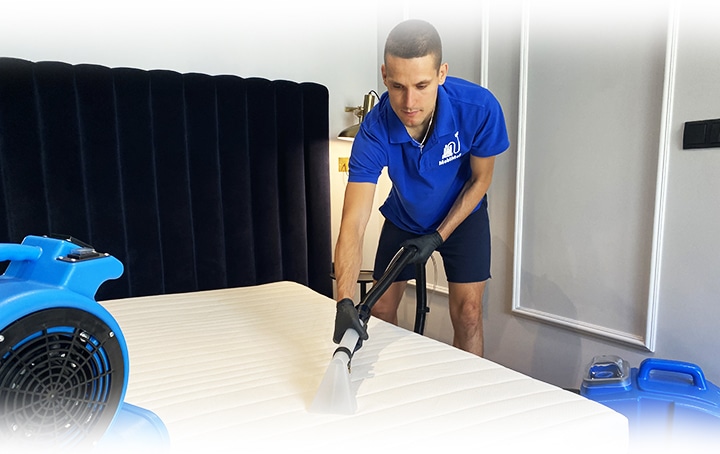
You spend roughly a third of your life on your mattress. Over that time it takes in sweat, shed skin, skin oils and moisture - in other words, everything dust mites and bacteria need. Below is a practical plan for looking after a mattress day to day: what to do every week, every month and twice a year, how to deal with the usual stains, and how to tell that a mattress needs professional cleaning.
Why it is worth knowing how to look after a mattress
We wash bedding regularly and that creates an illusion of cleanliness. In fact bedding stops only part of the soiling; the rest passes through. An adult loses between 200 and 500 ml of sweat a night and around 1.5 grams of skin. That soaks into the comfort layer of the mattress and stays there.
Moisture and skin cells create ideal conditions for house dust mites. They do not bite and cannot be seen with the naked eye, but their droppings are one of the strongest allergens in the home. That is exactly why many people wake up with a blocked nose, sneeze in the morning or have irritated skin - and the symptoms fade during the day, away from the bedroom.
Looking after a mattress: weekly, monthly, twice a year
There is no need to do everything at once. Keeping to a simple rhythm is enough.
| How often | What to do | How long it takes |
|---|---|---|
| Weekly | Change the bedding, air the bedroom with the mattress uncovered | 10 minutes |
| Monthly | Vacuum the mattress with an upholstery nozzle, check for stains | 15 minutes |
| Every 3 months | Turn the mattress, wash the protector at 60°C | 20 minutes |
| Every 6 to 12 months | Extraction cleaning of the mattress | booked in, 40 to 60 minutes of work |
| Every 8 to 10 years | Replace the mattress | - |
Airing - the simplest and most underrated step
Do not make the bed first thing in the morning. Throw back the duvet and leave the mattress uncovered for twenty to thirty minutes with a window ajar. The moisture from the night evaporates instead of being sealed in under a bedspread. This single habit genuinely limits dust mites, because they need humidity above 50%.
Vacuuming the mattress
Once a month, go over the whole mattress with an upholstery nozzle, paying attention to the seams and the quilting - that is where most dust collects. Move the nozzle slowly, overlapping each pass. Once the top is done, turn the mattress and do the same underneath if the construction allows.
Turning the mattress
Turn double-sided sprung and foam mattresses every quarter: once head to foot, once through 180 degrees lengthwise. That stops a hollow forming permanently in one place. Single-sided mattresses (with a clearly marked top face, often foam and latex) should only be rotated lengthwise - never flipped over.
How to remove common mattress stains
The governing rule: a mattress is not a fabric you can rinse out. Any water that soaks into it has to be drawn back out, otherwise the moisture stays in the foam and a smell appears within days.
Use a white paper towel, pressing and holding. Do not rub - you will spread the stain and push it deeper.
Spray the product onto a cloth rather than straight onto the mattress. That way you control how much moisture goes in.
A few minutes for the soiling to dissolve. With protein stains - blood, sweat - work cold and cold only.
With a dry towel, pressing firmly. Repeat until the towel comes away almost dry.
A fan aimed at the spot cuts drying from a dozen hours to two or three. Do not make the bed until the mattress is dry.
Blood
Cold water only. Warm water sets the protein and fixes the stain for good. A fresh stain only needs sponging with cold water and a little plain soap, pressing and blotting. A dried one is softened with saline solution or 3% hydrogen peroxide, though the latter can lighten coloured fabrics, so test in a hidden spot first.
Urine
First draw out as much liquid as you can with a towel, pressing hard. Then use an enzyme product - the only group of cleaners that breaks down the uric acid responsible for the smell. Water and ordinary detergent will dilute the stain, but the odour comes back with the first damp weather. There is more on this in our piece on removing urine odour.
Sweat and yellow discolouration
Yellow rings are salts and oils from sweat that have oxidised in contact with the air. Fresh ones come out with a solution of water and bicarbonate of soda; old ones need an enzyme product and patience, often several passes. Restoring pure white is sometimes impossible, but the odour and the allergens are removed completely.
Coffee, tea and wine
Act immediately: lift the liquid, then sponge with lukewarm water and a little washing-up liquid, drawing the moisture out as you go. The pigments in wine and coffee bind to fibre within fifteen minutes, so speed is what counts. Dried stains of this kind on a mattress usually call for extraction cleaning.
What not to do
- Do not use bleach. It damages the fibres of the cover and leaves permanent lighter rings.
- Do not dry a mattress with a hairdryer or close to a radiator. Concentrated heat deforms the foam.
- Do not use a steamer on memory foam. Steam introduces a lot of moisture and raises the temperature, and the foam loses its resilience.
- Do not leave bicarbonate of soda on a stain for days. It absorbs moisture and odour, but compacted into a damp layer it works into the material and is then hard to vacuum out.
- Do not cover a damp mattress with bedding. That is the shortest route to a musty smell.
When a mattress needs professional cleaning
Home care deals with the surface. Extraction cleaning reaches where a towel cannot.
- The mattress is more than a year old and has never been cleaned.
- Allergy symptoms appear in the morning and fade away from the bedroom.
- There are yellow or brownish marks, including under the protector.
- After changing the bedding there is a smell that returns within hours.
- There has been an accident: urine, vomit, a spilled drink.
- The mattress stood in a damp room or was stored in a cellar.
What extraction cleaning of a mattress looks like
First a thorough vacuum and an assessment of the cover fabric. Then spot treatment. Next comes the extraction itself: the machine injects solution into the comfort layer and immediately draws it back out along with the dissolved dirt. Finally we make passes without adding water - the most important stage, because how much moisture is removed determines the drying time.
A typical double mattress takes forty to sixty minutes. Afterwards it feels damp to the touch but not wet; it usually dries in four to six hours with a window ajar, faster with a dehumidifier. You can sleep on it the same evening. We describe the service in detail on the mattress cleaning at your address page.
Type of mattress and how it is cleaned
Not every mattress tolerates the same treatment. Before reaching for any product, check what you are dealing with - the label on the side usually gives the composition of the comfort layer.
Sprung (bonnell and pocket)
The most forgiving. It has air space inside, so residual moisture evaporates faster. It takes extraction without difficulty and only needs sensible water dosing so the felt layer around the springs does not get wet.
Foam and memory foam
It absorbs moisture and gives it back slowly, so strong suction and good airflow afterwards are essential. Memory foam does not tolerate high temperature, which rules out steam and hot water; the work is done with a lukewarm solution.
Latex
Naturally resistant to dust mites, but sensitive to alkaline products and to light. It is cleaned spot by spot with a minimum of water and always dried in the shade.
Coir and multi-layer children's mattresses
A coir mat is rigid and lets air through well, but once wet its fibres can clump together and crack. Here the rule is minimum moisture, maximum extraction.
A child's mattress - what is different
A child spends more hours in bed than an adult, and their mattress receives more liquid: milk, saliva, urine during toilet training, sometimes vomit. Add to that more sensitive skin and more frequent allergic reactions.
In practice that means three things. First, a protector with a membrane is compulsory here, not optional. Second, with liquid accidents what counts is reacting within the hour - the sooner you draw the liquid out, the smaller the chance it reaches the core. Third, only fragrance-free, hypoallergenic products should be used for cleaning; anything with a "fresh scent" leaves fragrance compounds on the mattress that the child then breathes all night.
A child's mattress is worth cleaning every six months, and during toilet training after every larger accident. Extraction with an enzyme product removes not only the stain but the source of the odour, which a child may not mention but which disturbs their sleep.
Where mattress odour comes from
A smell from a mattress almost never comes from the surface. It has three typical sources and each calls for a different response.
- Sweat and bacteria. A sour, slightly musty smell that is worse in the morning. Extraction cleaning with an antibacterial product solves it.
- Urine. A sharp ammonia smell that returns in damp weather. It needs enzymes to break down uric acid, otherwise it will always come back.
- Damp and mould. A cellar smell, often with a mattress standing against a cold wall or lying on a solid board with no ventilation. Here, besides cleaning, the conditions have to change: a slatted base instead of a solid board and the bed moved away from the wall.
If the smell returns despite cleaning, check the base and what the mattress lies on. A mattress placed directly on a furniture board has no way of releasing the moisture from the night - condensation collects underneath and after a few months dark patches appear.
Mattresses and allergies - what actually helps
Three things have a proven effect on dust mite numbers: humidity below 50%, regular washing of bedding at 60°C, and removing the layer of skin cells from the mattress. The order matters - cleaning first, then maintaining the conditions.
A few simple changes help too: smooth-weave bedding rather than terry, no rug right beside the bed, and washing the bedroom curtains once a season. Curtains collect dust that then settles on the bed; we write about cleaning them alongside upholstery cleaning.
Protector, sheet, bedding - how often to wash what
The mattress is only one element. Around it is a layer of textiles that decides how quickly the mattress itself gets dirty.
| Item | How often to wash | Temperature |
|---|---|---|
| Sheet and pillowcases | Every 7 to 10 days | 60°C with allergies, 40°C as standard |
| Mattress protector | Every 4 to 8 weeks | 60°C if the maker allows |
| Duvet | 2 to 4 times a year | 60°C for synthetic, per label for down |
| Pillow | Every 3 to 4 months | 60°C, synthetic goes in the machine |
| Bedspread | Every 1 to 2 months | per label |
The most commonly skipped item is the pillow. It takes up sweat and oils from hair and rarely gets washed - after a year it can hold more allergens than the mattress itself. Memory foam pillows, which must not go in the machine, are cleaned spot by spot and aired, and replaced every two years.
How long a mattress lasts and when to replace it
Manufacturers say eight to ten years, and that is a realistic range with good care. The signs that it is time for a new one: a clear hollow where you lie, waking with back pain, audible springs, and the situation where the smell comes back within weeks of cleaning - a sign that the core of the mattress is permanently contaminated.
If the mattress is less than eight years old and holds its shape, cleaning is decidedly better value than replacement. The cost of cleaning is a fraction of a new mattress, and the effect - removal of allergens, odour and discolouration - is noticeable from the first night.
Frequently asked questions
How often should a mattress be cleaned?
Once a year for one adult, every six months with an allergy sufferer, a child or a pet sleeping in the bed. After any liquid accident, straight away.
Can you sleep on a mattress the same day it is cleaned?
Yes, provided it has dried. With good moisture extraction that is four to six hours, faster with a fan or dehumidifier.
Is bicarbonate of soda enough?
It helps with fresh odour and light moisture, but does not remove allergens or soiling from deeper down. It is a supplement, not a substitute for cleaning.
Will cleaning remove old yellow stains?
It usually lightens them considerably, but long-standing sweat marks can be irreversible. Odour and allergens are removed completely.
Can a foam mattress be cleaned?
Yes, by extraction with a controlled amount of water. Steam and soaking are not used - foam does not tolerate excess moisture.
What about a mattress after a flood?
Time is what counts. If less than a day has passed, cleaning with drying usually saves the mattress. After several days in the damp the core is often already contaminated with mould and replacement is safer.
In summary
A mattress needs three things: airing every morning, vacuuming once a month and extraction cleaning once a year. A protector and a quick response to stains push everything else further into the future. That set of habits keeps a mattress in good condition throughout its life and noticeably improves sleep for people with allergies.
If you are not sure what state your mattress is in, send us a photo - we will assess it and give you a price before we arrive. We work at your home, the mattress does not have to go anywhere, and the whole treatment fits into an hour.
It is also worth planning the work so that one visit refreshes more than one item in the bedroom. If there is a rug beside the bed and an armchair in the room, cleaning everything in a single visit works out cheaper than three separate bookings - and the bedroom is back in shape in one day.